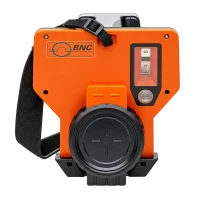
Description
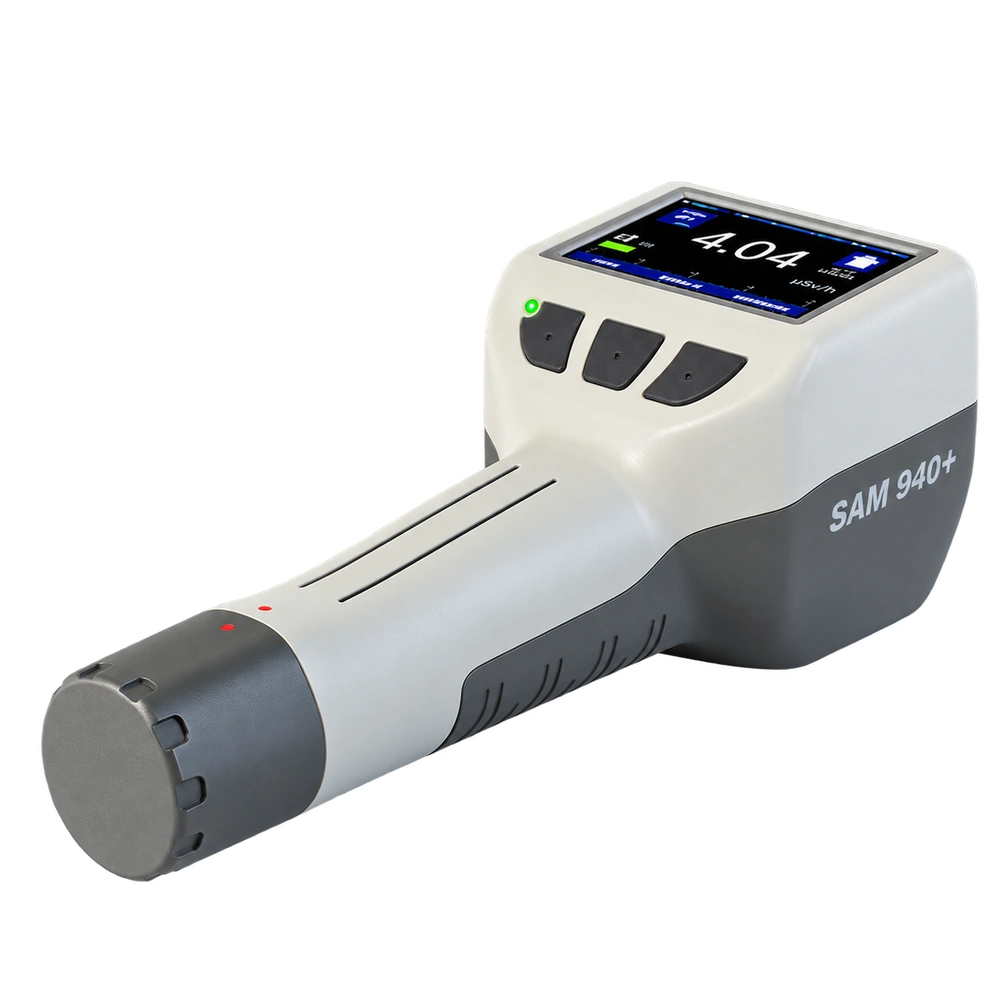
The new SAM 940+ is a re-engineered RIID (Radio Isotope Identification Device) that features an internal detector and is designed to address a growing demand for fast, accurate isotope identification. The new instrument reduces the burden on the operator by leveraging state-of-the-art communication protocols to quickly relay information to a management team. The lightweight design also limits fatigue in long operational scenarios and enables easy transport of your identifier in a belt holster or lanyard. In addition to ANSI-compliant spectroscopic results and alarming, the user has quick access to the on-board camera for appending video or images to the spectroscopic reports.
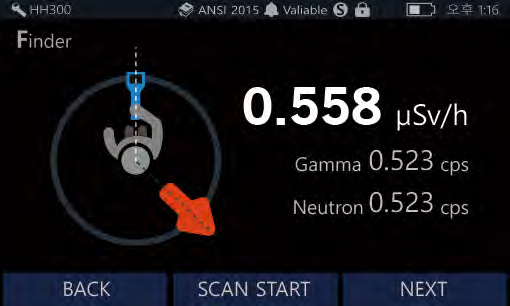
The new design includes some of the most exciting technologies available in a handheld instrument. The internal GPS system includes 66 Tracking Channels (1–10 Hz) to ensure high accuracy in the reported location data. A rechargeable Li-Ion battery allows for 7 hours of continuous use while an AA battery pack clips on for continued use when the internal battery is low. A gyro-sensor embedded in the SAM 940+ gives users immediate directional data to quickly locate and isolate alarming sources. Stand-off detection and ALARA standards are also met using the Smartphone Mirror application, allowing you to operate the unit from a distance. Existing SAM users will appreciate the add-on port, allowing the use of larger detectors, long detector cables or other needed peripherals.
While the front end of the SAM 940+ has been totally reworked for first responders and inspection agents, the underlying spectroscopy and analysis ensure health physicists and program management teams receive reliable information. Disposition of non-threat alarms or naturally occurring radiation can be accomplished promptly and with high levels of confidence. The exciting new design marries the demanding requests of the Police, Hazmat, Responder and Inspection communities with the performance expectations of the DOE and spectroscopic community.
SAM 940+ Evolution
The 3rd generation SAM is the most compact, lightest hand-held RIID in the world. Compared to its predecessors, the volume and weight are reduced by about one-third, while retaining all the advanced features from previous generations.
Features
- One-Click Reachback
- Built-in Camera: Multi-Media Support
- Sourceless Automatic Real-time Stabilization
- Remote Operation and Mirroring Display
- Directional Radiation Detection
- RadResponder Enabled
- Internal Detector
Detectors & Performance
The SAM 940+ supports a range of gamma scintillator crystals plus a GM pancake probe, with neutron detection available as an internal or external option. Energy resolution is specified at 662 keV.
| Parameter | Specification |
|---|---|
| Gamma detector | 2 × 2 inch NaI(Tl), CeBr3, LaBr3; 2 × 1 inch CeBr3 or LaBr3 |
| Neutron detector | 1.5 × 1.5 or 2 × 2 CLLBC, CLYC |
| External probe | NaI, CeBr3, LaBr3, 3He and GM Detector (Pancake Probe) |
| Energy range | 20 keV – 10 MeV (Gamma) |
| Linearization | Real-time linearization by firmware |
| Dose rate range | 10 nSv/h – 250 µSv/h (0–10 mR/h) |
| Dose rate range | 10 nSv/h – 100 mSv/h (10 mR/h – 100 R/h) |
| Stabilization | “K-40 Finder”: sourceless automatic real-time stabilization |
| Identification | ANSI N42.34 compatible | ANSI 2015 |
| Library categories | SNM, IND, MED, NORM |
| Typical resolution | NaI(Tl) <7%, CeBr3 <5%, LaBr3 <4% @ 662 keV; CLLBC <3.5%, CLYC <5% |
| MCA channel | 11 bit 2048 ch. |
Device Components
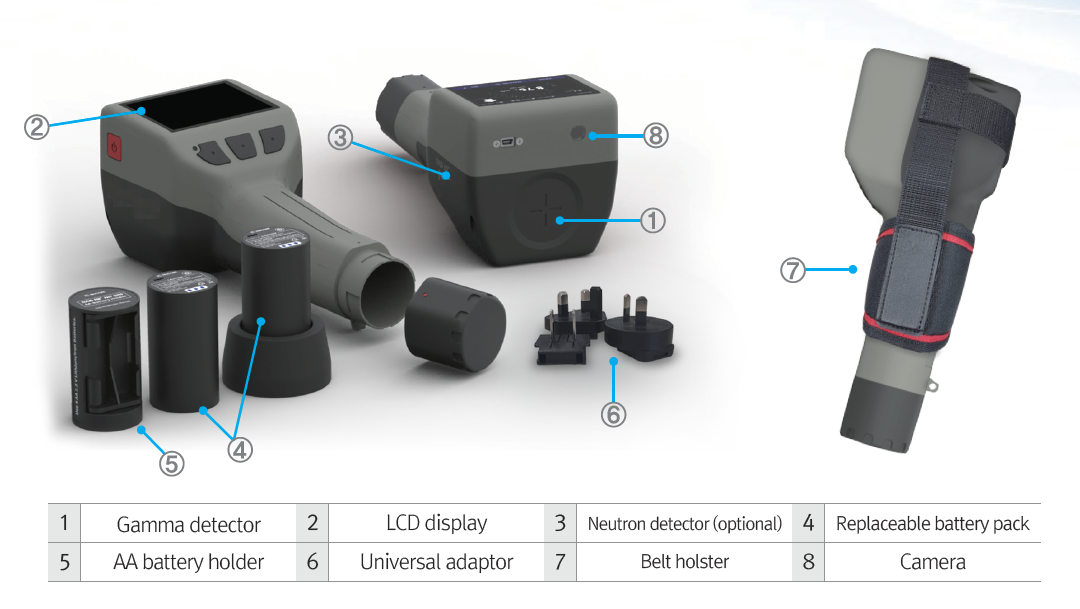
The SAM 940+ instrument and its accessories are made up of the following labeled components:
| No. | Component |
|---|---|
| 1 | Gamma detector |
| 2 | LCD display |
| 3 | Neutron detector (optional) |
| 4 | Replaceable battery pack |
| 5 | AA battery holder |
| 6 | Universal adaptor |
| 7 | Belt holster |
| 8 | Camera |
One-Click Reachback
SAM 940+ provides a “one-click reachback” solution for data transfer to the RadResponder Network or a command center. The multi-media support, GPS and communication capabilities enable the operator to rapidly deliver a complete, informative and actionable report to reach-back centers.
RadResponder
Integration with FEMA’s free network for logging, transmitting, storing, analyzing, and presenting environmental radiation monitoring data.
Command Center
Event data can be transferred to a command center via Wi-Fi network protocol. Peak ID application SW provides full analysis capability of event data.