
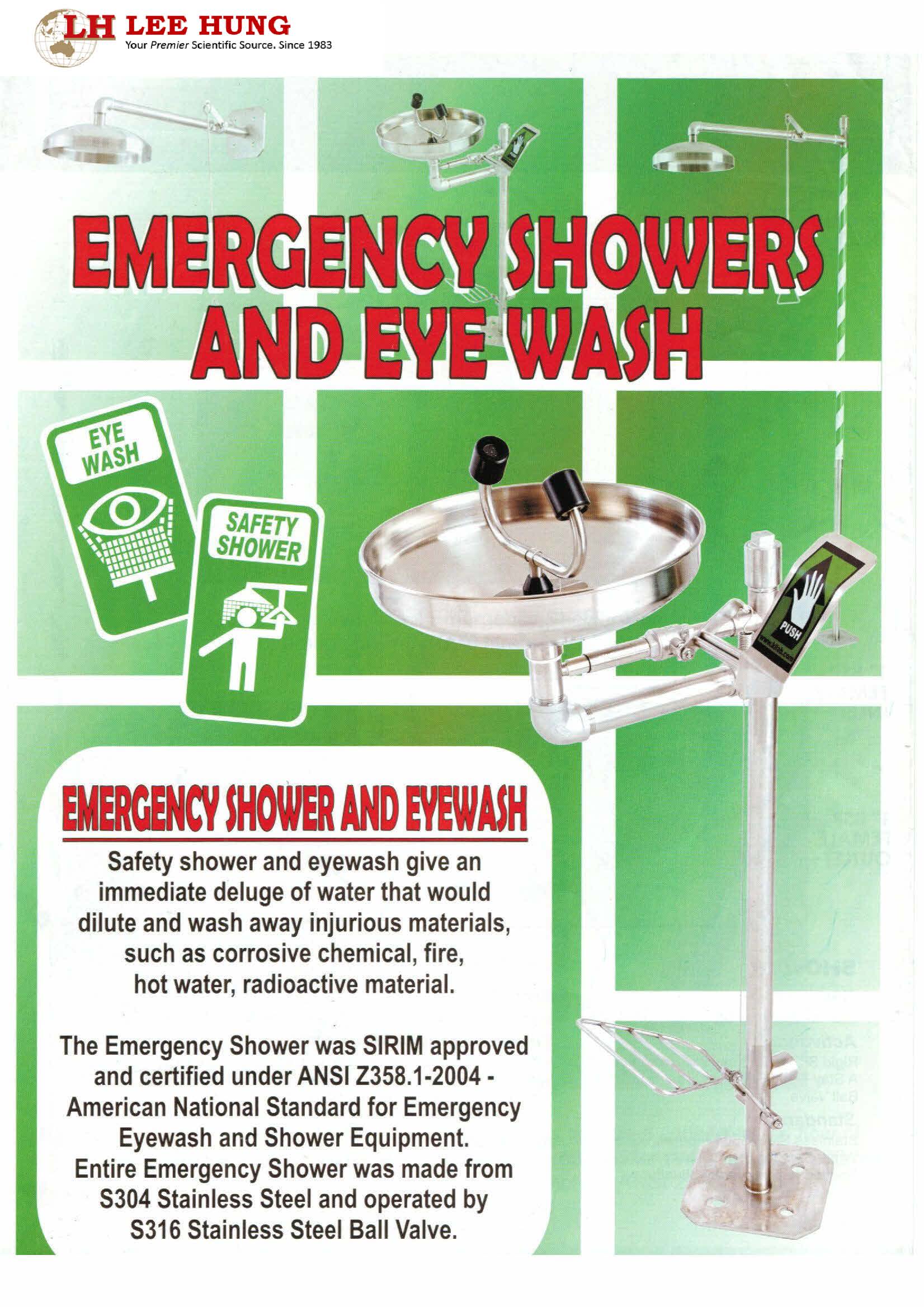
A chemical splash can expose a worker’s eyes or skin in seconds. Emergency showers and eyewash stations provide a way to begin flushing promptly while the workplace follows its emergency response procedures. Choosing the right unit depends on the substances handled, the area of the body that could be affected, and where the equipment can be installed.
In Singapore, the Ministry of Manpower (MOM) states that workplaces using toxic or corrosive chemicals must provide an eyewash station or nearby water facilities for quick flushing where accidental eye or body contact could occur. A workplace risk assessment should guide the type and location of equipment selected.
Which type of emergency washing equipment do you need
An eyewash station is intended to flush the eyes after exposure. An emergency shower can rinse a larger area of the body when chemicals may splash onto clothing or skin. A combination unit offers both functions at one location. The appropriate option depends on the task and the credible exposure identified in your risk assessment.
These facilities support an emergency response; they do not replace goggles, face shields, protective clothing or other controls used to prevent exposure in the first place.
Four factors to consider before choosing a unit
- Exposure risk: Consider the substances in use and whether an incident could affect the eyes, face, a small skin area or much of the body.
- Fast access: Place equipment where workers can reach and operate it promptly, with a clear path from the hazard area.
- Flushing supply: Confirm that the installation can provide a suitable water supply and that the equipment remains usable whenever hazardous work is underway.
- Construction and upkeep: Choose materials appropriate for the environment, then include the unit in routine inspection and maintenance procedures.
For example, a laboratory using small bottles at a bench and a production area transferring larger volumes may have different exposure scenarios. Map each task before choosing equipment: identify where a splash might occur, how the affected worker would reach the flushing point, and whether someone else can help during an incident. Keep that route clear as the workplace layout changes.
Before ordering, check the proposed connection and water supply, the available installation space, and any site-specific requirements. Confirm the selected model’s documentation instead of assuming that specifications or approvals listed for one unit apply to the entire range.
Looking for an emergency shower and eyewash system in Singapore?
View Emergency Showers & Eye Wash Systems
Send an Enquiry to Lee Hung Scientific
Emergency showers and eyewash from Lee Hung Scientific
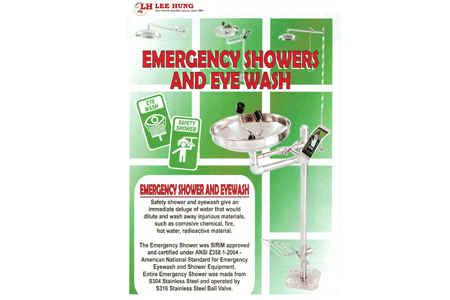
Lee Hung Scientific offers emergency shower and eyewash models for laboratory and industrial settings. Its emergency shower product page describes an S304 stainless steel shower with an S316 stainless steel ball valve. Check the specifications of the particular model you are considering, especially where site conditions or project requirements call for a specific material or configuration.
If you are planning a new installation or replacing an existing unit, share the chemicals handled, possible exposure areas and proposed installation location with the Lee Hung team. They can help you identify the available models that fit your requirements.
Frequently asked questions
When is an eyewash station needed in Singapore
MOM says an eyewash station or nearby water facilities for quick flushing must be provided where toxic or corrosive chemicals are used and accidental contact with a person’s eyes or body may occur. Review the specific workplace hazards to determine the suitable provision and location.
Should I choose an eyewash, a shower or a combination unit
Consider where a splash could land. Eye exposure calls for an appropriate means of eye flushing; potential exposure over a larger body area may require a shower. A combination unit can be considered where both types of exposure are credible.
How should emergency washing equipment be maintained
Keep access clear and inspect and maintain the equipment according to the manufacturer’s instructions and your workplace procedures. Checks should identify faults or supply problems before the equipment is needed in an emergency.
Explore the available range: Emergency Showers and Eye Wash